Why Wildfire Smoke and Dust are Clogging Sandy Cooling Systems
Why Wildfire Smoke and Dust are Clogging Sandy Cooling Systems
Smoke from summer wildfires and the Wasatch Front dust load create problems that standard air conditioning systems in Sandy were never meant to handle day after day. The issue is visible on the return filter, but the real damage hides inside the evaporator coil, the blower wheel, and the outdoor condenser coil. When those surfaces load with fine particulate, air volume drops, coil temperatures swing out of range, and compressors run hot. That is when calls for AC repair in Sandy UT spike, especially during July and August heat.
Local technicians see the same pattern across Sandy neighborhoods like Willow Creek, Pepperwood, Granite, Crescent, and Quarry Bend. A homeowner thinks the filter is fine because it was replaced last month, but airflow is weak, the system short cycles, or the coil ices over after sunset. The filter did its job, but smoke and construction dust still slipped past and packed into the coil fins. Sandy sits at roughly 4,450 to 4,800 feet in elevation, so each system already runs with about 9 to 14 percent less real cooling capacity than its sea-level nameplate. Add fouled surfaces and the margin disappears.
What smoke and dust do to AC systems in Sandy
Wildfire smoke carries an enormous load of fine particulate. Most of it is PM2.5 sized or smaller. Standard 1-inch pleated filters catch some of it, but not all. The rest lodges in the evaporator coil and the indoor blower wheel. That adds static pressure. The blower ramps up in response if it is an ECM variable speed motor. Amp draw rises. The system keeps trying to hit setpoint, but reduced airflow lowers coil temperature and triggers freeze risk. On single-stage systems, the compressor cannot modulate, so it keeps pushing against poor heat transfer until high head pressure trips a safety or the capacitor fails from heat stress.
Outdoor units in Sandy, especially homes near Dimple Dell Regional Park, along Wasatch Boulevard, and near Little Cottonwood Canyon, gather cottonwood fluff in May and June and dust through the rest of summer. The condenser coil runs hot when fins are matted with debris. That forces the compressor to work harder to reject heat. It is common to see refrigerant subcool readings that look normal while head pressure sits far higher than it should for the day’s dry-bulb temperature. The short version is simple. Smoke and dust reduce the system’s ability to move heat. Everything runs hotter and longer, and failures follow.
Altitude derating in Sandy creates a hidden repair risk
At Utah Valley and Salt Lake Valley elevations, the air is thinner. Every 1,000 feet of elevation costs roughly 2 to 3 percent of an air conditioner’s capacity. Sandy’s elevation band means a 4-ton system often delivers only about 3.5 tons of real cooling on a 95 degree afternoon. That is before any filter or coil restriction. This is why the same component that lasts ten years in a low-altitude climate can fail at year seven here. Capacitors cook faster. Compressors run at higher amperage. A small refrigerant undercharge that a sea-level system could tolerate becomes a major heat-load problem in Sandy.
Technicians who diagnose AC repair in Sandy UT need to read superheat and subcool against altitude-adjusted expectations. A charge that looks acceptable by sea-level tables can be wrong here. Western Heating, Air and Plumbing technicians measure refrigerant pressures, temperature splits, superheat, and subcool, then assess them in the context of Sandy’s elevation and that day’s weather. That is how a clogged condenser coil or a smoke-choked evaporator coil shows up early, before the compressor fails or the evaporator turns to ice.
Why the 2023 through 2026 smoke years made filters and coils a frontline issue
Along the Wasatch Front, wildfire smoke has reached Utah County and southern Salt Lake County many summers in a row. During persistent smoke days, PM2.5 readings can exceed the EPA 24-hour health standard of 35 micrograms per cubic meter. When the air outside holds that much fine particulate, an HVAC system turns into a 24-hour vacuum. Filters load two to four times faster than they do during a clear-air month. A 1-inch pleated filter that lasts 60 to 90 days in May may last 30 days or less in August.
Western’s technicians in Sandy and nearby Draper and Cottonwood Heights see a striking field pattern. During heavy smoke weeks, indoor static pressure measurements at the filter rack and coil show increases of 0.10 to 0.25 inches of water column in homes that otherwise passed airflow checks in spring. That small rise is significant. An ECM blower responds by drawing more amps to preserve target CFM. Utility bills rise. And when a home stays on the default MERV 8 filter, the small particulate keeps pushing forward into the coil fins, where brushing and rinsing becomes the only fix. This is not guesswork. It shows up on the manometer and in the blower’s amp draw, and it shows up again on the service history six to twelve months later if the coil is not cleaned.
How Sandy housing stock and site conditions amplify the problem
Sandy has a range of home styles. In Pepperwood, Willow Creek, and along the east bench, homes often run zoned HVAC and longer duct runs that demand careful static pressure control. Any added restriction from smoke and dust hits these systems harder. In older Granite and Crescent homes, return air sizing is often tight and filter racks are smaller. That limits surface area and speeds up filter loading. In neighborhoods west of State Street and around The Shops at South Town, outdoor condensers sit in more exposed, dusty pockets near parking lots, construction, and cross streets that push grit into the coil fins. These site specifics change repair priority. A clogged outdoor coil on a south-facing wall at Quarry Bend can drive head pressure higher than the same equipment set back in north-side shade a mile away.
Symptoms that tie back to smoke and dust restriction
Most repair calls start with a symptom that seems unrelated to smoke or dust. The pattern below shows the connection that technicians confirm once they open the panels and measure.
- Weak airflow at far registers, strongest near the air handler or furnace
- Short cycling in the late afternoon, often followed by an evening freeze-up
- High energy bills coupled with a thermostat that drifts off setpoint on hot days
- Outdoor unit that is hot to the touch with fan running but poor cooling indoors
- Musty odor or fine soot on return grilles after several smoky days
Each symptom can have more than one cause. In Sandy, during smoke season, they often share the same root problem. Air cannot move through the surfaces the way it could in May. The fix may be as simple as a filter change and a coil wash. Or it may involve a deeper evaporator coil cleaning, a capacitor replacement that heat stress forced, and a refrigerant charge correction once proper airflow is restored.
Technical markers that guide accurate AC repair in Sandy UT
Reliable AC repair starts with numbers. On a mid-July service call near Alta View Hospital, a technician might find a 20 degree indoor temperature split but poor room cooling. Static pressure tests at the return, across the coil, and on the supply side identify the restriction point. Superheat at the evaporator and subcool at the condenser show if the refrigerant charge is correct for the day. If subcool reads high with elevated head pressure and low condenser fan discharge air temperature rise, that points to a condenser coil that cannot reject heat. If superheat runs low with a cold suction line and frost at the TXV bulb, expect airflow restriction across the evaporator coil or a stuck expansion device. The diagnostic sequence moves from airflow to refrigeration because airflow problems in Sandy during smoke season are so common that skipping straight to refrigerant can mislead the repair path.
Electronic leak detection and dye tests are still standard when pressures suggest a slow leak. But the first step is to clean the coils and set the blower back to target CFM. Only then does it make sense to pull out the recovery machine or add refrigerant back to an R-410A system. With the refrigerant transition to lower GWP options like R-454B underway for 2025 and beyond, charge precision will matter even more. This region’s altitude reduces error margins.
Filtration and IAQ upgrades that matter on the Wasatch Front
An upgrade to MERV 13 filtration on a properly sized media cabinet typically captures a much greater portion of wildfire smoke particulate than a basic 1-inch filter. HEPA bypass filtration and UV air sanitizers can add another layer of particulate and microbial control. The tradeoff is pressure drop. A MERV 13 filter packs denser media. On an undersized return or a blower with limited headroom, that can over-restrict system airflow. The right solution blends better filtration with a duct evaluation, sometimes a return-side enlargement, and a blower setup check. Duct cleaning makes sense if registers discharge visible soot or if construction dust from remodels has settled into long runs that feeding bedrooms on the second floor. Western Heating, Air and Plumbing recommends these upgrades based on measured static pressure and duct condition, not by guesswork.
Wasatch Front inversion season compounds the same issue during winter. People think more about heating then, but the air the system moves is the same air that loaded the coil all summer. A good indoor air quality assessment with MERV 13 or HEPA filtration and a smart thermostat can reduce summer smoke intrusion and winter inversion exposure. That works best when combined with proper fresh air strategy and pressure balancing so the home does not suck smoky air in through gaps.
Why Sandy’s heat and altitude change baseline equipment performance
Central air systems in Sandy fight a double load. High dry-bulb temperatures in the afternoon and lower-density air that carries less heat per cubic foot. In practice, that means a condenser working at 2,000 feet above sea level can reject heat faster than the same condenser at 4,600 feet when both are clean and charged. Add a thin veil of dust to the outdoor coil and a thin mat of smoke residue to the indoor coil and the Sandy system falls behind even further. A two-stage or variable capacity system with an ECM blower does better here because it can modulate and hold comfort without constant on-off stress, but it still needs clean coil surfaces to deliver design capacity.
What Western technicians see block by block in Sandy
Homes along 1300 East and near Dimple Dell Regional Park often have outdoor units emergency ac repair, ac repair services, ductless ac repair, home ac repair, ac repair company, 24 hour ac repair, set in planting beds. Sprinklers throw hard water on the coil fins. That bakes into mineral scale. Then smoke sticks to it. Coil cleaning here requires fin-safe chemicals and a gentle straightening, not just a garden hose flush. Along Quarry Bend and South Towne, wind patterns lift dust from lots and roads into the side yards. Those condensers need more frequent service to stay within normal head pressure on 95 degree days. Up toward Willow Creek and the Pepperwood gate, trees shed organic debris and shade helps lower condensing temperature a few degrees, but needles and leaves mat coils fast. The system runs quieter until a high head pressure trip or a seized fan motor says otherwise.
Shareable local claim about altitude and Sandy AC capacity
At Sandy’s elevation band, a central air conditioner’s real Btu per hour output is typically 10 to 13 percent lower than its nameplate rating during peak summer. That means a 3-ton unit often behaves like a 2.6 to 2.7 ton system at 4,600 feet. This altitude effect, combined with smoke-driven coil fouling, explains why amperage readings on compressors in Sandy run higher on hot afternoons than identical equipment at sea level. Local homeowners and HOAs can verify this on service reports that list head pressure, compressor amp draw, and temperature splits before and after coil cleaning. The numbers swing back toward design once airflow and heat rejection are restored.
How Western approaches AC repair in Sandy UT during smoke season
Field work starts with airflow because airflow protects the compressor. Technicians measure static pressure at multiple points, check blower settings, and inspect the evaporator coil face. If the coil is dirty, they clean it. If the outdoor coil is packed with debris, they foam and rinse it from the inside out. Only then do they lock in charge with superheat and subcool that make sense for Sandy’s elevation and that day’s conditions. They test capacitors with a meter for microfarad value, inspect the contactor, and record compressor and blower motor amp draw under load. They clear the condensate drain line, especially on systems that iced over. They verify thermostat calibration and staging on two-stage or variable systems. The goal is simple. Restore heat transfer, restore airflow, and then set the refrigeration circuit to those conditions, not to a fouled-state baseline.
Maintenance intervals that match Sandy conditions
In smoke years, one AC tune-up in spring is not enough. Systems near Wasatch Boulevard and the east bench benefit from a mid-summer condenser coil cleaning and a filter change, even if the spring tune-up found no issues. For most Sandy homes, filters need inspection every 30 days in July and August, not just quarterly. Fall furnace tune-ups remain essential because dust and smoke residue from summer sit on the same blower and coil that the furnace will rely on all winter. Western sets maintenance plans around the Wasatch Front seasonal cycle so the system hits design performance in both directions.
Commercial and multi-tenant properties in Sandy face the same load
Strip centers along State Street, offices near The Shops at South Town, and small industrial spaces west of I-15 run packaged rooftop units that bake in the sun and gather dust at a higher rate. When smoke rolls in, their filters and coils clog even faster. These systems do not fail gently. They run until the high pressure switch trips or a blower belt snaps. Western’s commercial HVAC service includes scheduled coil cleaning, belt checks, and filter management that consider smoke season. That keeps tenants comfortable and protects inventory and equipment inside.
Code, efficiency, and rebate details that affect Sandy homeowners
New central air installations in Utah fall under the Utah State Energy Code with a minimum SEER2 of 14.3 for split systems in this climate zone. Repair projects should leave the system set up to meet or exceed those performance expectations. When a repair reaches the point where AC replacement makes more sense, homeowners in Sandy can often use Rocky Mountain Power Wattsmart incentives for high efficiency upgrades. Program details change and depend on equipment and verification, but many qualifying high efficiency AC and heat pump installations have seen $300 to $800 in rebates in recent cycles. Federal 25C tax credits remain available for qualifying central AC up to $600 and for heat pumps up to $2,000, subject to the current IRS rules and caps.
The refrigerant landscape is shifting. Most existing systems still run R-410A. New equipment is moving toward lower GWP options such as R-454B. EPA Section 608 requirements for refrigerant handling remain in force for all systems. The point for homeowners is simple. Accurate charge, leak-free connections, and proper documentation protect warranties and safety as refrigerant options change.
Cost and timeline patterns for AC repair in Sandy UT
Repair costs vary with parts, access, and how much coil cleaning and setup the system needs after smoke season. A diagnostic with static pressure checks, superheat and subcool measurements, and a basic condenser cleaning lands in home AC repair near me a modest range when no parts are needed. Capacitor and contactor replacements are common mid-range repairs. Blower motor replacements, evaporator coil clean-in-place service, and refrigerant leak repairs climb higher. Compressor failures are the most expensive and often trigger a replace-versus-repair decision if the unit is out of warranty and past mid-life.
Timelines depend on parts availability and severity. Many same day AC repair calls in Sandy finish within a single visit when the system needs cleaning, a filter correction, and a small part. Evaporator coil pull-and-clean work and compressor replacements take longer and may require a second visit. During heat waves, Western expands dispatch to keep pace, but smoke-season surges fill the schedule fast. Priority goes to homes with no cooling, elderly occupants, medical needs, and properties with high exposure to afternoon sun.
Cross-valley context and why Utah County data still helps Sandy homeowners
Western’s headquarters in Orem at 235 S Mountain Lands Dr in zip code 84058 sits just south of Sandy across the county line. The team sees the same smoke and dust patterns across Orem east bench neighborhoods like Cascade and Suncrest and in central Orem near the University Parkway corridor. Utah Valley altitude sits at roughly 4,775 feet. That produces a bigger derating than Sandy in some spots. The field lessons carry over. Coil fouling that pushed an Orem system off spec in July is the same failure mode that will hit a Sandy system after a week of smoke and 98 degree afternoons. The repair sequence is the same. Restore airflow, restore heat transfer, set charge to altitude-adjusted values, then verify blower performance and thermostat control.
Homes in Lindon, Pleasant Grove, and American Fork share the same smoke load during bad weeks. If a property owner runs short filters or leaves the condenser in a dust-prone corner, the equipment fails the same way whether the home sits in 84097 on Orem’s east bench or near Sandy’s Alta High School. Tying the diagnosis to the valley’s shared conditions leads to faster, cleaner fixes.
Why this topic matters for property value and tenant comfort
Real estate agents and property managers across Utah County and southern Salt Lake County track HVAC condition because it influences offers and lease renewals. A Sandy home with a clean blower, clean coils, correct refrigerant charge at altitude, and MERV 13 filtration holds temperature better during showings and inspections. Inspection reports that note static pressure within manufacturer limits and document coil service win trust. For commercial spaces near State Street or 700 East, keeping rooftop units within head pressure targets during smoke season avoids emergency shutdowns that interrupt business. This is one of those behind-the-scenes building performance items that only shows up in the complaints when it is wrong.
Practical steps Western recommends between smoke events
There is no need to turn the home into a lab to keep cooling systems closer to design during smoke season. The following items are simple but effective when set up by a qualified HVAC team and checked on a regular schedule.
- Install a correctly sized media cabinet that allows MERV 13 filtration without exceeding manufacturer static pressure limits
- Schedule a mid-summer condenser coil cleaning and a filter inspection when wildfire smoke persists
- Ensure the outdoor unit has 18 to 24 inches of clear space and redirect sprinklers to avoid hard water scale on coils
- Seal return leaks and enlarge undersized returns where practical to reduce filter face velocity and slow loading
- Use thermostat schedules and staged cooling to reduce peak load stress during the hottest hours
Each of these items ties back to airflow and heat transfer. When the surfaces are clean and the air can move, the system holds temperature with fewer failures. That is the heart of AC repair strategy in Sandy during dusty and smoky summers.
Western’s field process for data-backed repairs
Western technicians work from the data they gather on site. They record external static pressure and duct zone pressures with a calibrated manometer. They log blower motor amp draw and compare it to nameplate full-load amps. They measure superheat and subcool and check those readings against Sandy elevation expectations. They document temperature split across the coil and check actual delivered CFM. If duct leakage is suspected, they recommend HERS duct leakage testing. They repair what is broken, but they also reset the system to a baseline that will survive smoke weeks better than it did before the call. This approach reduces callbacks and protects equipment through the second half of summer.
Equipment and component notes that turn up in Sandy repairs
Capacitors fail often here. Heat and long run cycles wear them out. Contactors pit and stick from frequent cycling. Fan motors pull higher amps when fins clog with dust. Thermal expansion valves stick when contaminants accumulate after years of hard service. Condensate drain lines clog with algae after a freeze-thaw cycle from short cycling. Evaporator coils in older furnaces with tight A-coil cabinets are challenging to clean properly without pulling the coil. Western stocks common parts for same day AC repair and brings the coil cleaning gear that protects fins during service. On replacement-grade calls, two-stage compressors, ECM variable speed blowers, and zoning that is set up correctly make a clear difference on hot afternoons at altitude.
Why this year’s refrigerant and code landscape matters on every repair
Even on a repair call that does not involve refrigerant, the current code and refrigerant path affect decisions. The Utah State Energy Code sets expectations for efficiency and installation practice. The 2024 International Mechanical Code influences venting, condensate, and safety controls. EPA Section 608 certification governs refrigerant handling. With the industry moving away from R-410A to lower GWP refrigerants like R-454B, technicians and homeowners both need to protect warranty pathways. That means leak-free brazing, correct filter drier replacement after open system repairs, and charge verification by measured superheat and subcool rather than by guess. Western aligns repair practices to those standards so the system that gets through smoke season this year is still serviceable when it is time to consider a high efficiency upgrade that may qualify for Wattsmart incentives or the federal 25C tax credit.
How small setup corrections prevent big failures
On many Sandy calls, the ultimate fix is not the part that failed. It is the return grille that is undersized, the filter rack that leaks around the edges, or the condenser set in a gravel bed that gets blasted by wind. Correcting these details reduces head pressure by 20 to 40 psi on a hot day, which drops compressor amps and temperature. Western technicians show homeowners before and after readings so the connection is clear. Protecting the system from smoke and dust starts with protecting the path that air and heat take through the equipment.
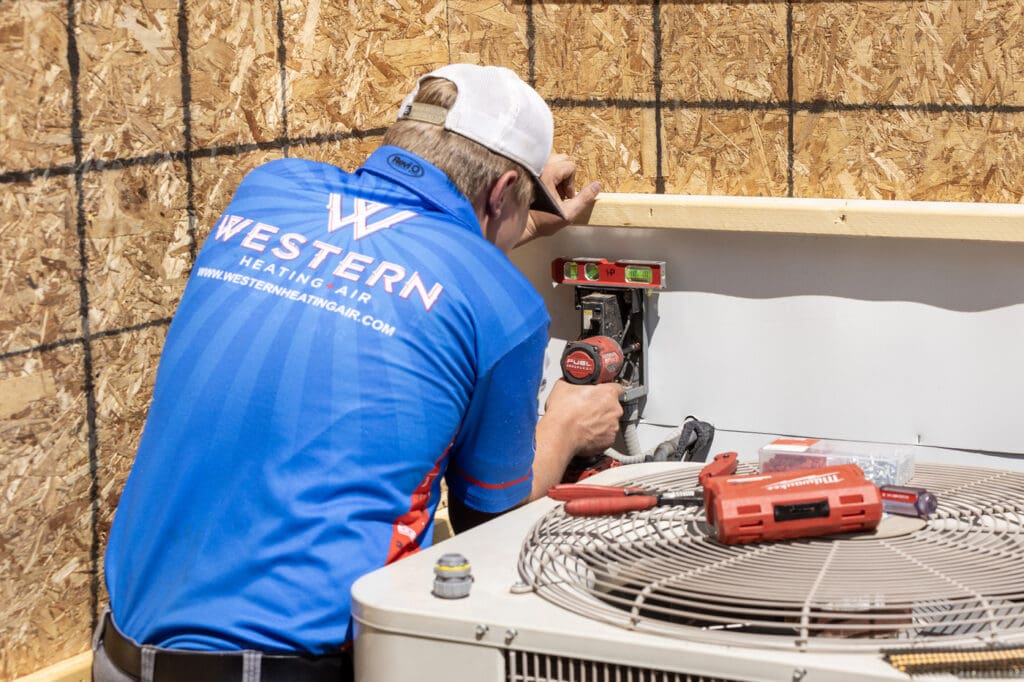
Why a cross-county service footprint helps during peak demand
Western covers Sandy, Draper, Cottonwood Heights, and the full south valley while dispatching from Orem in Utah County. The team already serves heavy summer demand in Orem, Provo, Lindon, and Pleasant Grove. This cross-valley coverage helps stabilize parts inventory and scheduling when wildfire smoke drives calls in both counties at the same time. It also means Sandy homeowners can tap a larger technician pool during the specific weeks when AC repair in Sandy UT becomes a same-day priority. Zip codes such as 84058, 84057, and 84097 show up on the service map alongside Sandy’s own corridors and neighborhoods because the same smoke systems often sweep both valleys.
What property owners can expect on the day of service
Expect a focused visit. The technician confirms symptoms, checks filters and coils, measures static pressure and refrigeration values, and inspects electrical components. If cleaning is needed, that happens first. If a failed part shows up, replacement follows. Before wrapping up, the technician sets charge at altitude, verifies blower performance, and confirms the thermostat and zoning work as intended. A clear summary explains what failed, what was corrected, and what conditions to watch for on the next smoky spell. That clarity helps owners plan. If replacement makes more sense, the sizing conversation references Manual J load calculation, duct condition, and Sandy elevation so that the next system starts life set up for this valley, not for sea level.
Ready to restore cooling the right way
Western Heating, Air and Plumbing serves Sandy, Draper, Cottonwood Heights, and the south valley with AC Repair, AC Maintenance, Emergency AC Repair, Duct Cleaning, MERV Filtration Upgrade, Air Purifier Installation, and full HVAC and plumbing support. Utah Licensed HVAC and Plumbing Contractor. BBB Accredited. NATE Certified Technicians and EPA Section 608 refrigerant certified. Headquarters at 235 S Mountain Lands Dr, Orem, UT 84058 with rapid dispatch across Utah County and the Wasatch Front. For AC repair in Sandy UT, call +1-385-526-3384 or request service online at https://westernheatingair.com/service-area/orem-ut/. Same-day AC repair is available when the schedule allows, with priority for no-cool calls during heat waves. Financing is available on approved credit for major repairs and replacements. Business hours cover installations, consultations, and standard service, with rapid dispatch available when active HVAC or plumbing failures threaten comfort or property.
Western Heating, Air & Plumbing provides HVAC and plumbing services for homeowners and businesses across Sandy and the surrounding Utah communities. Since 1995, our team has handled heating and cooling installation, repair, and upkeep, along with ductwork, water heaters, drains, and general plumbing needs. We offer dependable service, honest guidance, and emergency support when problems can’t wait. As a family-operated company, we work to keep your space comfortable, safe, and running smoothly—backed by thousands of positive reviews from satisfied customers. Western Heating, Air & Plumbing
9192 S 300 W
231 E 400 S Unit 104C Phone: (385) 233-9556 Website:
https://westernheatingair.com/,
Furnace Services
Social Media: Map: View on Google Maps
Sandy,
UT
84070,
USA
Salt Lake City,
UT
84111,
USA
Instagram |
Facebook |
BBB